Art Inspired By Your Stories
Hi, I’m Margaret Joy.
I’m a watercolor artist, but the real magic in my work doesn’t start with me. It starts with you—your memories, your inside jokes, your “only-our-family-would-get-this” stories.
For years I tried to create in isolation, chasing the “right” ideas alone in my studio. I made plenty of pretty things, but something always felt a little disconnected, like I was painting near people instead of with them.
That changed when I started asking a simple question: “What should I paint?” From Instagram prompts to our in‑person JoyBox at the Charleston City Market, people began handing us tiny snapshots of their lives—teddy bears that need passports, grandma’s teacup, a random object from a trip that still makes you smile. I realized my favorite work wasn’t coming from my own ideas at all. It was coming from your stories.
Now, everything we do is built around that switch. We create with people, not for them. My brushstrokes meet your memories to turn ordinary objects into keepsake art that feels delightfully personal. One story at a time, we’re building the world’s largest collection of community-inspired art—and we’d love for your story to be part of it.
The Early Years
I've been creating since I was a kid. Growing up as the second youngest of 8 kids in Spokane, Washington, my creativity was definitely influenced by my older siblings — all very creative and passionate. I remember a couple of years where I was really into drawing as a kid, but I can't say I was very good. My love for creative expression really took off when I started making collage cards from old magazines. I had pen-pals I wrote to every week, so I would spend hours collaging every week, which eventually led me into mixed media and acrylics.
At 15, I displayed my first collection of about 20 pieces at a local cafe. I made my first little price tags and even set up an email address where people could reach out if they were interested in purchasing anything. Thirty days went by and I never got an email. I was discouraged, but not surprised—I knew it took real talent to sell art.
But on the very last day of the month, I received an email from someone who wanted to purchase the entire collection for their private home and commission me to paint four more pieces. I was floored. They wanted to purchase my work. That was a defining moment for me. For the first time, I thought, "Maybe I really can be an artist."
The Breaking Point
When COVID hit, everything shifted.
I lost my job and suddenly had a lot more time to paint. In many ways, it was a creatively rich season. I was experimenting, sharing work on Instagram, and even making a good amount of income from those pieces. There was a lot of encouragement and momentum.
But after a while, I started to feel a little stuck. Not burnt out, not "I hate this," just… in a creative rut. I kept circling the same ideas and putting pressure on myself to come up with the "right" next thing.
At some point in that stretch, I tried something simple: I asked my Instagram followers, "What should I paint?"
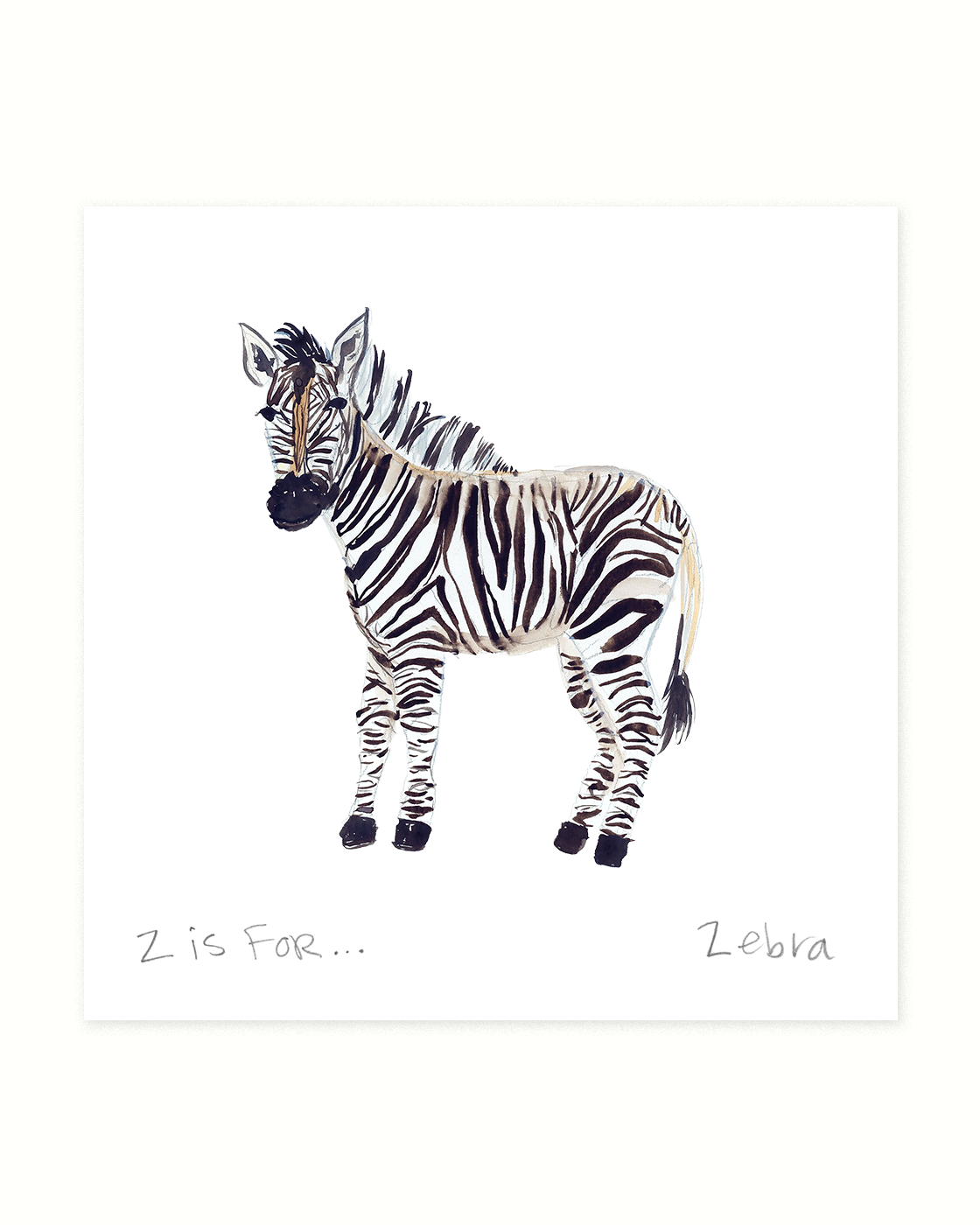
I decided to start with the alphabet.
"A is for ___."
Someone said "Astronaut," so I painted it. Then asparagus. Apples. Antelope.
For B, someone suggested "bobby pins."
Then came a hippopotamus, pizza, roller blades.
They were all these quirky, specific objects I never would have chosen on my own, and they were surprisingly fun to paint. I could feel a different kind of connection with people, because the ideas weren't just mine anymore—they were ours.
Over the next few years, I kept returning to that practice, painting through dozens and dozens of these prompts. The little pieces eventually ended up stacked in a crate in my closet, and for a long time that's where they lived: a quiet pile of proof that art could be more collaborative than I'd realized.
The Breaking Point
When COVID hit, everything shifted.
I lost my job and suddenly had a lot more time to paint. In many ways, it was a creatively rich season. I was experimenting, sharing work on Instagram, and even making a good amount of income from those pieces. There was a lot of encouragement and momentum.
But after a while, I started to feel a little stuck. Not burnt out, not "I hate this," just… in a creative rut. I kept circling the same ideas and putting pressure on myself to come up with the "right" next thing.
At some point in that stretch, I tried something simple: I asked my Instagram followers, "What should I paint?"
I decided to start with the alphabet.
"A is for ___."
Someone said "Astronaut," so I painted it. Then asparagus. Apples. Antelope.
For B, someone suggested "bobby pins."
Then came a hippopotamus, pizza, roller blades.
They were all these quirky, specific objects I never would have chosen on my own, and they were surprisingly fun to paint. I could feel a different kind of connection with people, because the ideas weren't just mine anymore—they were ours.
Over the next few years, I kept returning to that practice, painting through dozens and dozens of these prompts. The little pieces eventually ended up stacked in a crate in my closet, and for a long time that's where they lived: a quiet pile of proof that art could be more collaborative than I'd realized.
New York and the Long Search
In my early 20s, I moved to New York City to help my sister and brother-in-law plant a church. To my surprise, I spent eight years there, juggling jobs to make rent while my art was always being made in the background. I kept pursuing opportunities I thought would move me closer to the dream of doing art full-time—working at an art gallery in Chelsea, then as an assistant to a New York Times–celebrated artist, and eventually managing a small gift shop called Pink Olive.
Being in the fine art world, I quickly realized I didn't like being there. I wanted my work to feel like something people could see themselves in and bring into their everyday lives.